
The Family Court System
Punished for Protecting
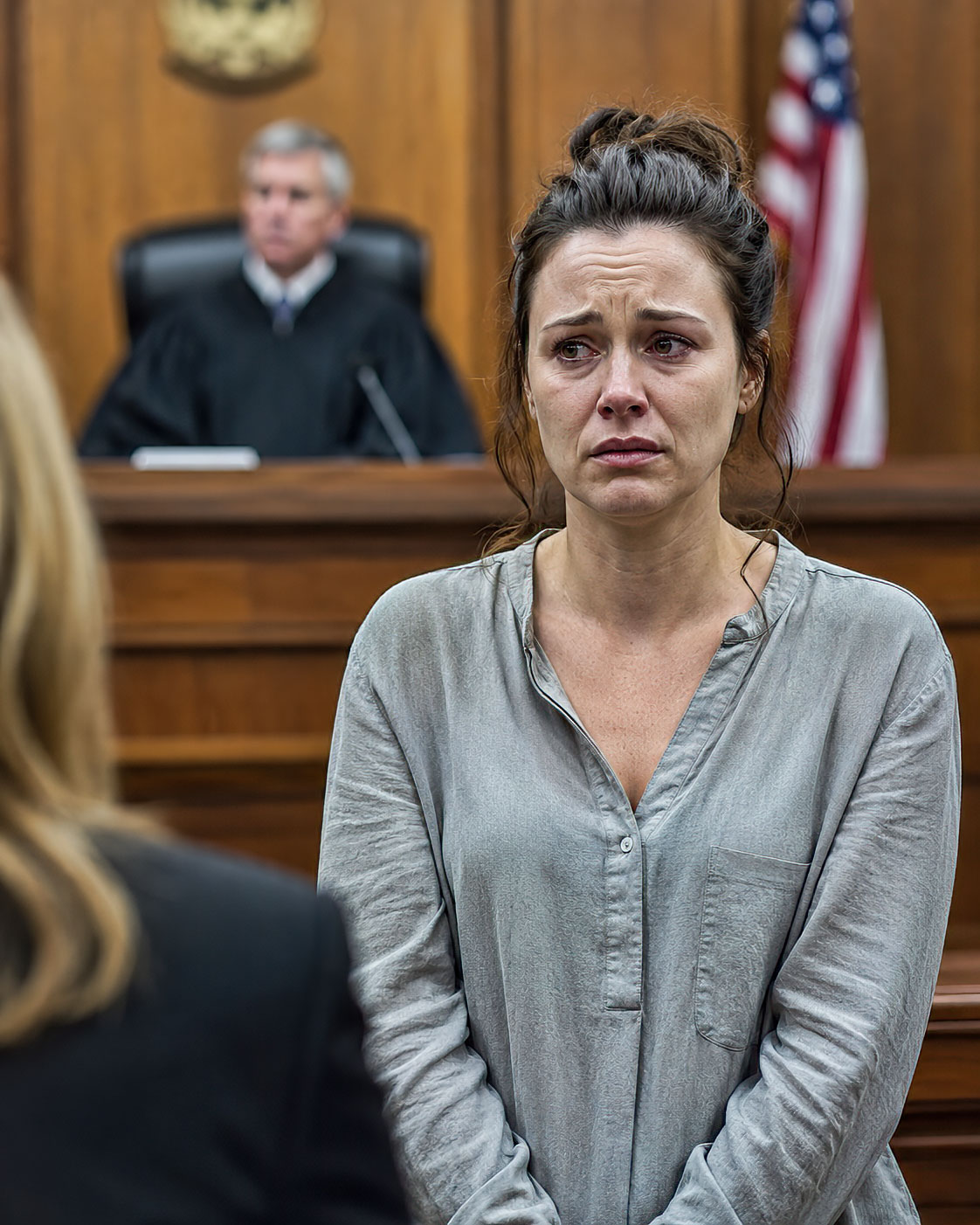
For many protective parents, family court is a bewildering and dangerous place where allegations of domestic violence or child abuse are minimized, reframed, or used against them.
How It Works
Despite abundant evidence that her child has been sexually molested by her ex-husband, no woman can safely walk into any family court and not face a grave risk of losing custody to the abuser. Even if she herself has been repeatedly assaulted by the violent father of her child, she can lose custody for the sole reason that she dared to present the evidence to the judge and ask that the child be protected.
Why is that? The fault does not lie with the “law” except to the extent that judges are granted discretion under the law. No statute, codal provision, or court rule was ever designed for the purpose of hurting kids. If the law fails kids, the judges are failing kids.
There are several paradoxes that terribly frustrate those in these trenches. First, criminal courts — with the heavy burden of proof beyond a reasonable doubt — will convict people for crimes of abuse on the same evidence that family court judges deem to be no evidence at all.
The “child’s best interest,” a phrase so insidiously potent that appellate courts are loath to question some trial judge’s irrational, unsubstantiated, gender-biased, self-contradictory, absurd, off-the-wall interpretation of it.
Second, normal reactions of mothers to abuse of themselves or their children are viewed by family court judges as evidence that the abuse never occurred.
Third, mental health evaluations are considered more reliable and desirable “evidence” of whether or not an event occurred than eyewitnesses, physical evidence, or even admissions by the perpetrator.
And fourth, the lack of eyewitnesses, physical evidence, or admissions is considered proof that the event did not happen, despite its rejection as meaningless when present.
We live in an era professing condemnation of child rape and wife beating. We spend countless advertising dollars seeking to persuade mothers to protect themselves and their children, and when they do not act quickly enough, they are found unfit for choosing the abuser over their own child.
Yet, let them heed our advice, let them go to the courthouse — often for the first time in their lives, to ask the judicial branch to honor its end of the social contract- and request simple physical safety, and they face destruction in the backfire of a system beating its chest to the hollow chant of the “child’s best interest.”
The “child’s best interest,” a phrase so insidiously potent that appellate courts are loath to question some trial judge’s irrational, unsubstantiated, gender-biased, self-contradictory, absurd, off-the-wall interpretation of it.

What You Need to Know
The myth that family courts unfairly favor mothers in reality protects abusers.
Mothers are significantly more likely to lose custody when a child alleges they were abused by their father.
For an abusive and controlling man, the ultimate threat is always, ‘if you leave me, I will take custody of the kids.’
Men who have tried everything they can to maintain control of their abused wives will turn to the family court system, and they fight for custody.
There are men in treatment who admit to doing this. But most judges don’t understand the dynamics of domestic violence.
Instead, they will remove children from protective parents and place them with alleged abusers.
Judges and so-called child custody experts are frequently dismissive of pleas from battered women. They provide fathers with even more access, refusing to consider evidence of domestic violence or treat abused mothers with even marginal respect.
It is crucial for a parent who is a victim of domestic violence or has a child who is a victim of physical or sexual abuse not to fall into another well-known trap, the problematic ‘Friendly Parent Paradox.’
This scenario forces mothers to promise they will foster children’s relationships with their abusers, almost guaranteeing an unending cycle of power, control, violence, and child sexual assault.
Parental Alienation Syndrome
The handiest aspect of molesting children and beating women is that these crimes come with their own defense.
The vindictive women made it up to get back at their men.
In virtually every court allegation of these crimes, the defense is the same.
In that regard, Richard Gardner’s foolish ‘Parental Alienation Syndrome’ (PAS) simply calls evidence that abuse did indeed occur evidence that the child was programmed by the ever-evil mother.
And unfortunately for the victims, the abusers find willing accessories on the bench who will find those motivations lurking in the accusers despite a total lack of any evidence to support those notions.
Criminal court juries usually see through the bogus wall of desperation.
Family court judges -– the supposed gatekeepers of protection -–instead help lay the bricks by allowing abusers to wield this pseudoscience as an insidious tool that undermines credibility and strips women of custody rights.
Alienation becomes the only ‘disease’ diagnosed by lawyers.
The consequences are devastating. Fathers who use PAS to counter allegations of abuse by mothers are twice as likely to win custody, according to a 2020 national study on parental alienation that was funded by the US. Justice Department.
“Parental alienation concocts this notion that if a kid exhibits certain symptoms that, incidentally, are the same symptoms of being abused, it was alienation,” Richard Ducote told ProPublica in August 2023. “It was a very clever idea to take the evidence of a child being abused and recast it.”


Role of the Amicus/Guardian ad Litem
Most jurisdictions by statute have some mechanism for either mandatory or discretionary appointment of some type of legal representative for children in custody cases. It is estimated that more than 1,100 guardians ad litem are appointed weekly in the United States.
The flawed rationale for appointing these GALs in custody cases is that all parents who are presumed competent to raise their children and beyond the state’s heavy hand prior to the commencement of the divorce case are somehow transformed into mere combatants, inherently blind to their children’s needs.
Now they need the wisdom and control of some typically young lawyer to avoid falling into the vortex of litigation.
And that lawyer must be paid an hourly rate. Anything a parent shares with them can and will be used against them in court.
The road to hell is indeed paved with good intentions and detours through the family courts.
It should be sufficiently alarming to a legal system cast with life-altering decisions that the power of the role of the GAL, one of its sacred cows, is apparently more elusive than is the definition of “best interest.”
Many concerns have been raised about their use, with most complaints centering on their behavior primarily in contested divorce actions. Their bias, lack of oversight and accountability, inadequate training and inappropriate communications with judges endanger children’s welfare.
GALs compromise and confound what should be an orderly fact-finding judicial process.
Their role is not defined in any way that fits comfortably within appropriate judicial proceedings, and there is no documented benefit to their use. They can undermine fact-finding by usurping the judge’s role, depriving parents of due process, intruding on parental authority and privacy, draining family resources through costs and fees, advocating against safety and protection in child-abuse and domestic-violence cases, and remaining largely unaccountable for their actions.